

































The Problem
Temperature Is Only Half the Story
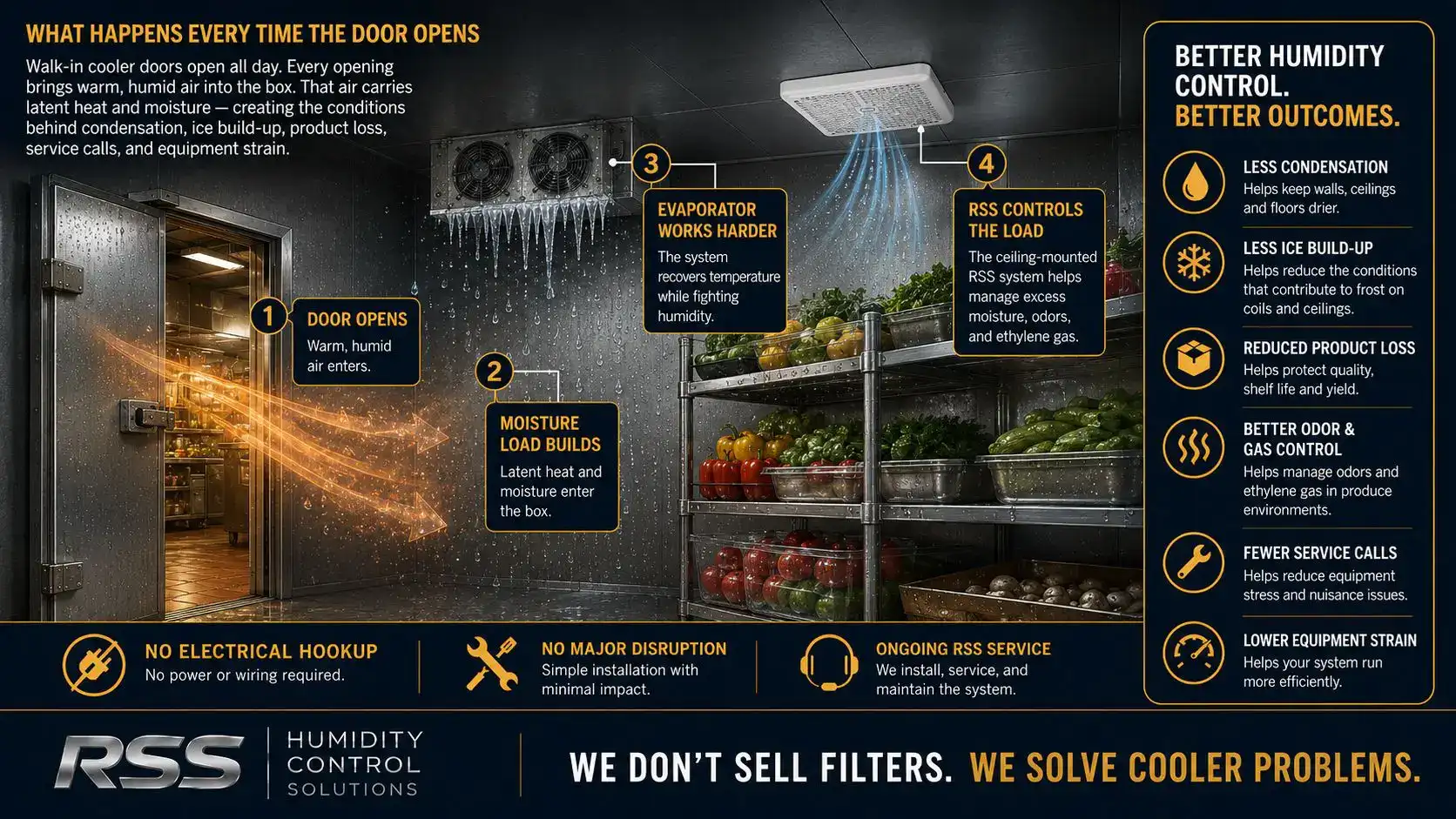
In any commercial kitchen operation, cooler door openings are inevitable. Throughout the day, teams open walk-in and reach-in coolers for deliveries, prep, stocking, service, cleaning, and product rotation — often dozens to hundreds of times per day depending on the operation. Every opening allows warm, humid air to enter the refrigerated environment. Most operators monitor temperature because that is the number they are trained to watch. But temperature alone does not show the full condition inside the box. A cooler may recover below 39°F and still carry excess moisture inside the environment. That moisture can contribute to condensation, ice build-up, wet packaging, odors, product quality concerns, longer recovery burden, and additional equipment strain.
Product Quality Protection
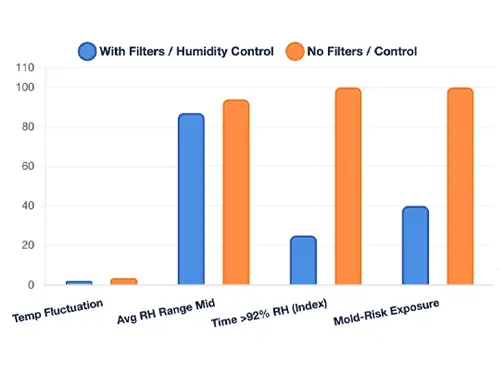
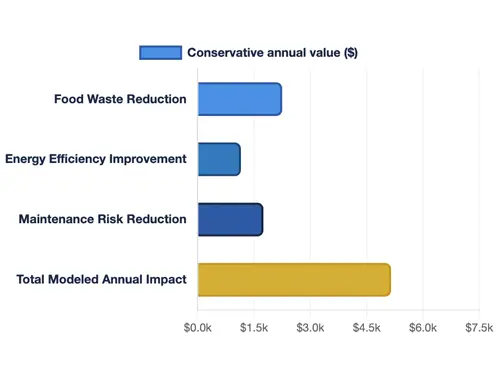
Excess humidity can affect the environment around the product — contributing to wet packaging, condensation, odors, soft produce, protein packaging concerns, and product that may be discarded before it should.
Reduced Equipment Strain
Moisture does not disappear. It can condense, freeze, create ice build-up, restrict airflow, and force refrigeration equipment to fight more than temperature.
Improved Cooler Performance
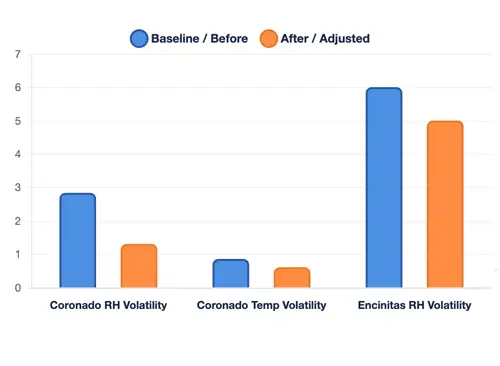
Temperature recovery is only part of the story. By helping reduce the moisture load inside the box, RSS supports cleaner airflow conditions, better environmental recovery, and more consistent cooler operation.
Dedicated Humidity-Control Strategy
Most coolers are built to control temperature — not humidity. RSS gives operators a service-based strategy for managing moisture conditions that are often ignored until they become product loss, service calls, equipment strain, or daily operational frustration.